Herb combinations
Mixing Herbs in One Kratky Container
A large Kratky container can hold several net pots of herbs. It works well when the herbs share the same needs, and badly when they don't. Here is how to group them.
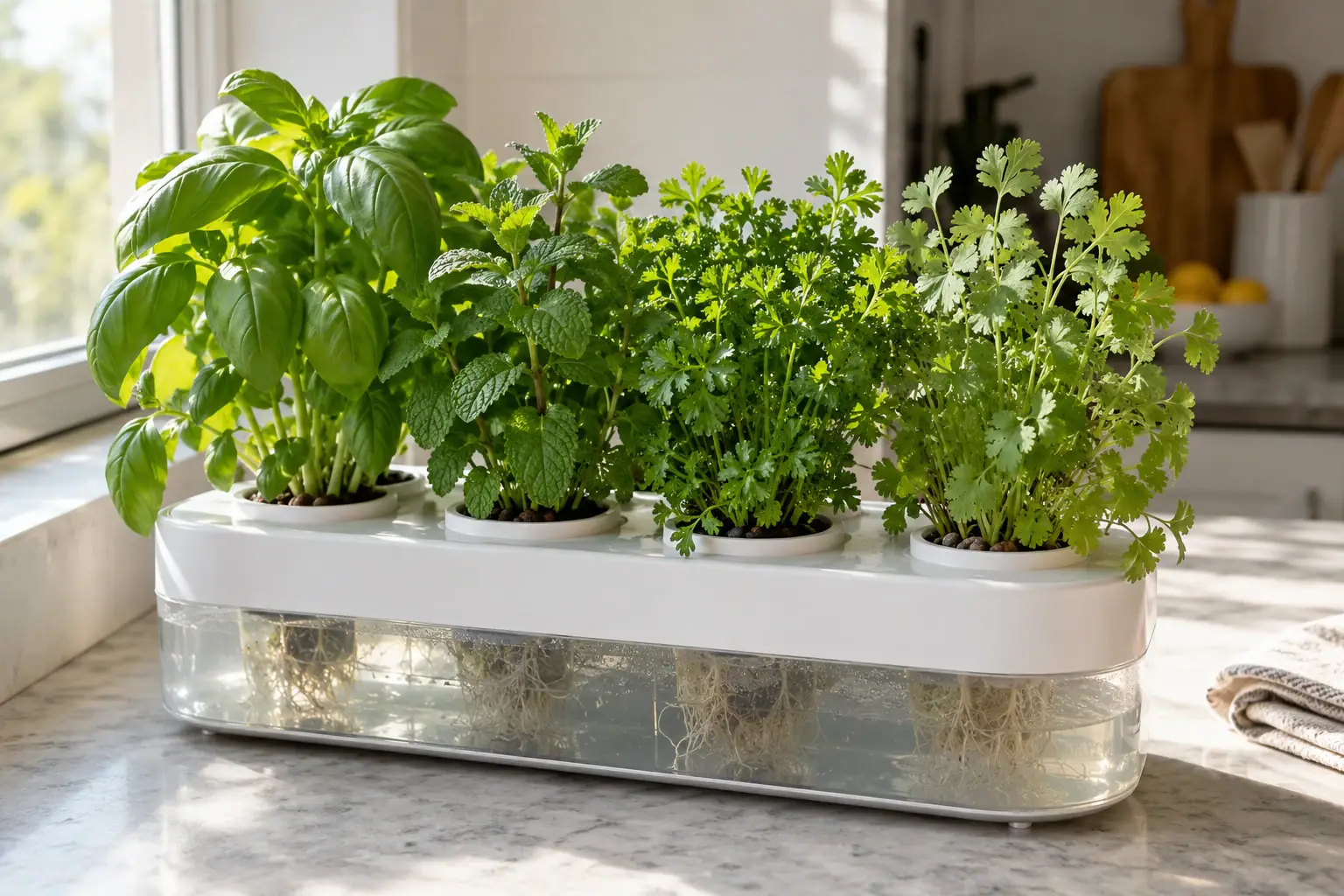
The rule
Group Herbs That Live the Same Way
In a shared Kratky container every plant drinks from the same solution, at the same strength, with the same falling level. So the herbs in it need to agree on three things: how much light they want, how wet they like their roots, and how long they will grow. When they agree, a shared container saves space and work. When they don't, one herb thrives and the others struggle.
A tub with a lid and three or four net pot holes is the usual setup. Keep the container dark, as with any Kratky herb setup, and give each herb its own net pot.
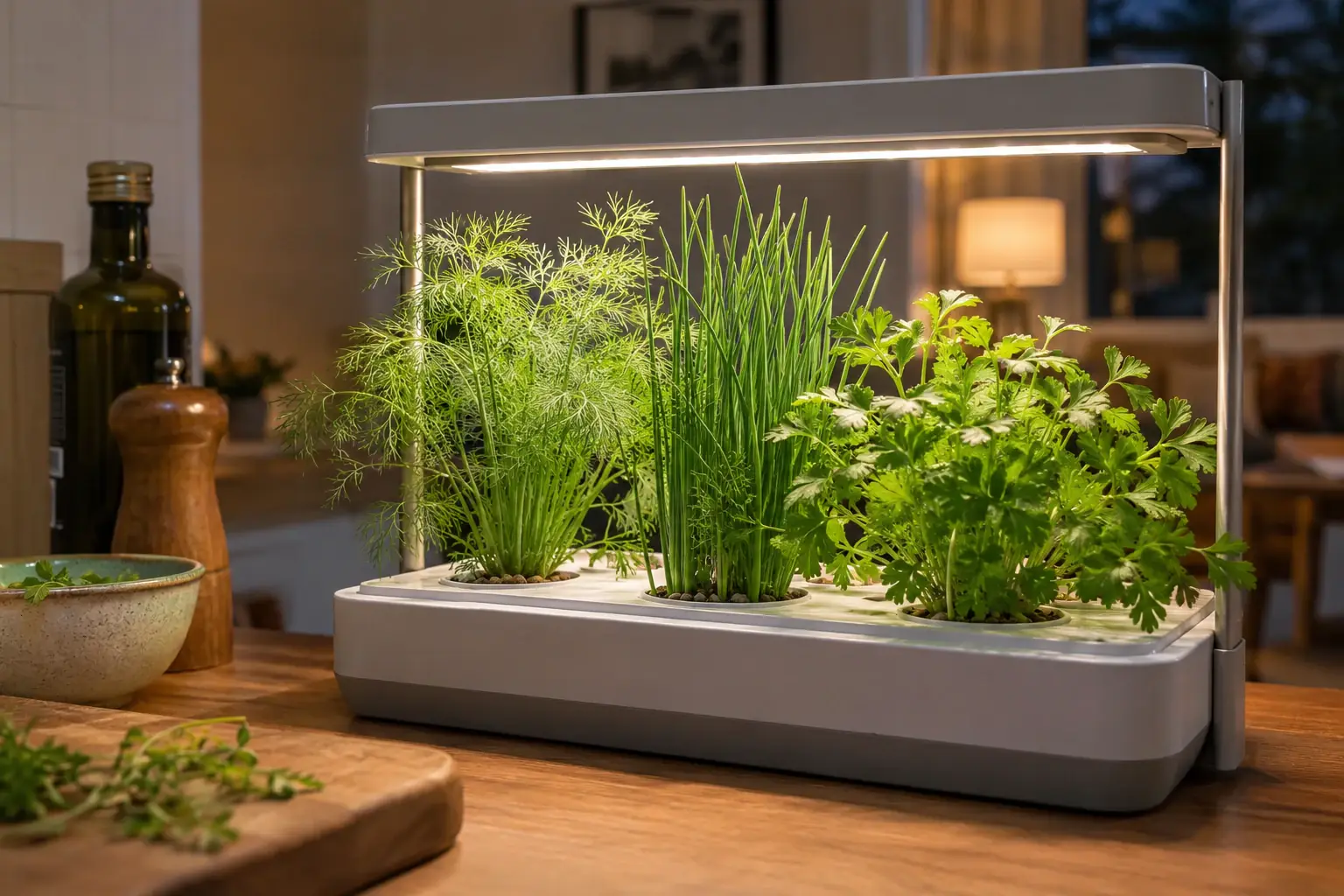
3-4net pots per tub
Good pairings
Herbs That Share a Container Well
Basil and parsley
Both are leafy, like warmth and bright light, and grow for months. A classic kitchen pair. See Kratky basil and Kratky parsley.
Parsley and chives
Both are slow, steady and long-lived, and both tolerate a slightly cooler spot. See Kratky chives.
Thyme and oregano
Both are woody Mediterranean herbs that want strong light and a dry stem base. See Kratky thyme and Kratky oregano.
Keep apart
Herbs That Need a Container of Their Own
- Mint: its roots fill a container fast and crowd everything else out. Always grow it alone; see mint roots filling the jar.
- Cilantro: it is short-lived and bolts after a few weeks, so it is best in its own jar that you can restart often. See Kratky cilantro.
- Rosemary: it is so slow that faster herbs shade and out-drink it. See Kratky rosemary.
- Leafy herbs with woody herbs: basil wants the solution near its roots for longer; thyme wants its stem dry. One level can't suit both.
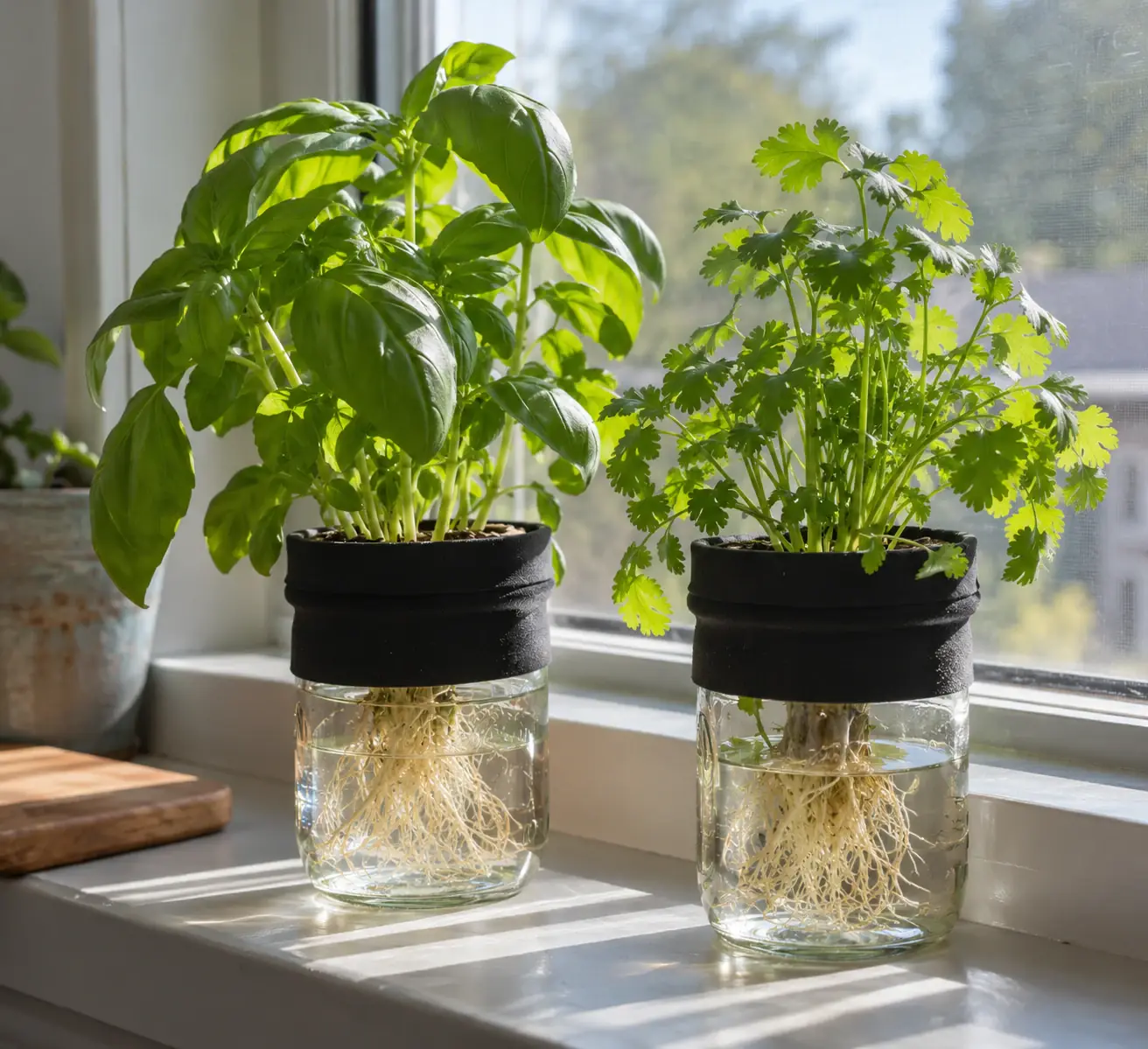
mintalways alone
Setup
How to Set Up a Shared Herb Container
Pick a large, dark tub
A few gallons, opaque or wrapped, with a lid that holds net pots.
Space the net pots
Leave several inches between holes so leaves and roots have room.
Start the herbs together
Plant herbs at the same stage, so the youngest isn't shaded out.
Fill to the net pots
Fill so the bases of all the net pots just touch the solution.
Harvest evenly
Cut every herb regularly so no single plant takes over the light.
Upkeep
Managing the Level in a Shared Container
A shared container drinks faster than a single jar, because several plants pull from the same solution. That is fine: the level falls, the air gap grows, and the roots follow the solution down, exactly as in any Kratky setup.
The catch comes when the herbs drink at different speeds. If the container runs low before the slowest herb is mature, top it up part way with fresh solution, only to about the bottom of the shortest roots. Filling it back to the net pots would leave the upper roots of every plant under water.
When one herb is clearly finished, cut it at the base and leave its roots in place rather than pulling them out and disturbing its neighbors. When the whole container is spent, start everything fresh together.
Check the container every few days at first, until you know how fast your combination drinks.
FAQ
Herb Combination Questions
Do herbs in one container need different nutrients?
They all get the same solution, which is why grouping herbs with similar needs matters. A standard herb nutrient suits leafy herbs; woody herbs do fine with it too.
Can I add a new herb to a running container?
It is harder: the level has already dropped below a new seedling's roots. Start herbs together, or give a newcomer its own jar.
Will one herb's roots tangle with another's?
Yes, in time. Leave space between net pots, and restart the container when roots become a single mat.
What if one herb gets sick?
Problems like root rot spread through shared solution. Remove the sick plant quickly.
Is one big container better than several jars?
A big container holds more solution and lasts longer between top-ups. Separate jars let you restart or move one herb without disturbing the rest.
Which herbs should a beginner combine first?
Basil and parsley. Both are leafy, like the same warmth and light, and forgive small mistakes. Add a separate jar of mint alongside rather than in the same tub.
Related Kratky Herbs
When several herbs are producing at once, preserve the extra.