Growing chives with Kratky hydroponics
Kratky Chives
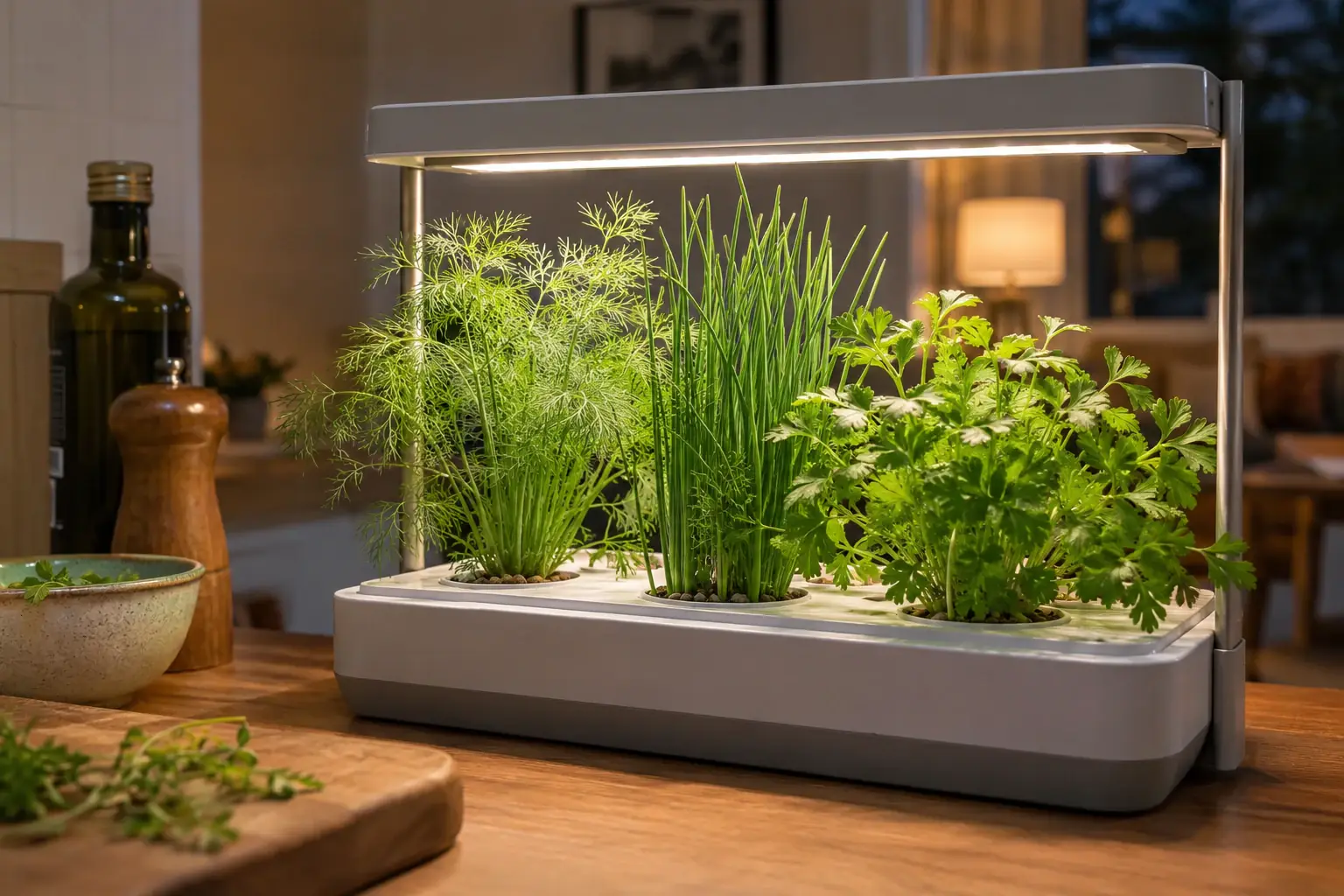
Chives are one of the most forgiving herbs for a Kratky container. Cut them, and they grow back. One jar on a sunny sill gives you mild onion flavor for months.
Why it works
Chives and the Kratky Method
Chives (Allium schoenoprasum) are a small perennial onion grown for their hollow, grass-like leaves. They form a dense clump of thin bulbs and roots, need no support, and regrow from the base after every cut, which suits a passive Kratky container well.
They are easier than most herbs: chives tolerate cooler rooms, a little less light, and a missed harvest. If you are thinking of garlic chives, the flat-leaved, garlic-flavored cousin, our sister site has a guide to Kratky garlic chives.
cutand come again
Getting started
Seed or Clump?
There are two ways to start Kratky chives.
From seed
Sow 8 to 10 seeds in each starter cube; chives grow as a clump, so don't thin them. Sprouts appear in one to two weeks, and the first cut comes about two months after sowing.
From a divided clump
Buy a pot of chives, wash all the soil off the roots, pull off a small clump of bulbs, and set it in a net pot with clay pebbles. You can cut it within weeks.
Step by step
How to Grow Kratky Chives
Pick a dark container
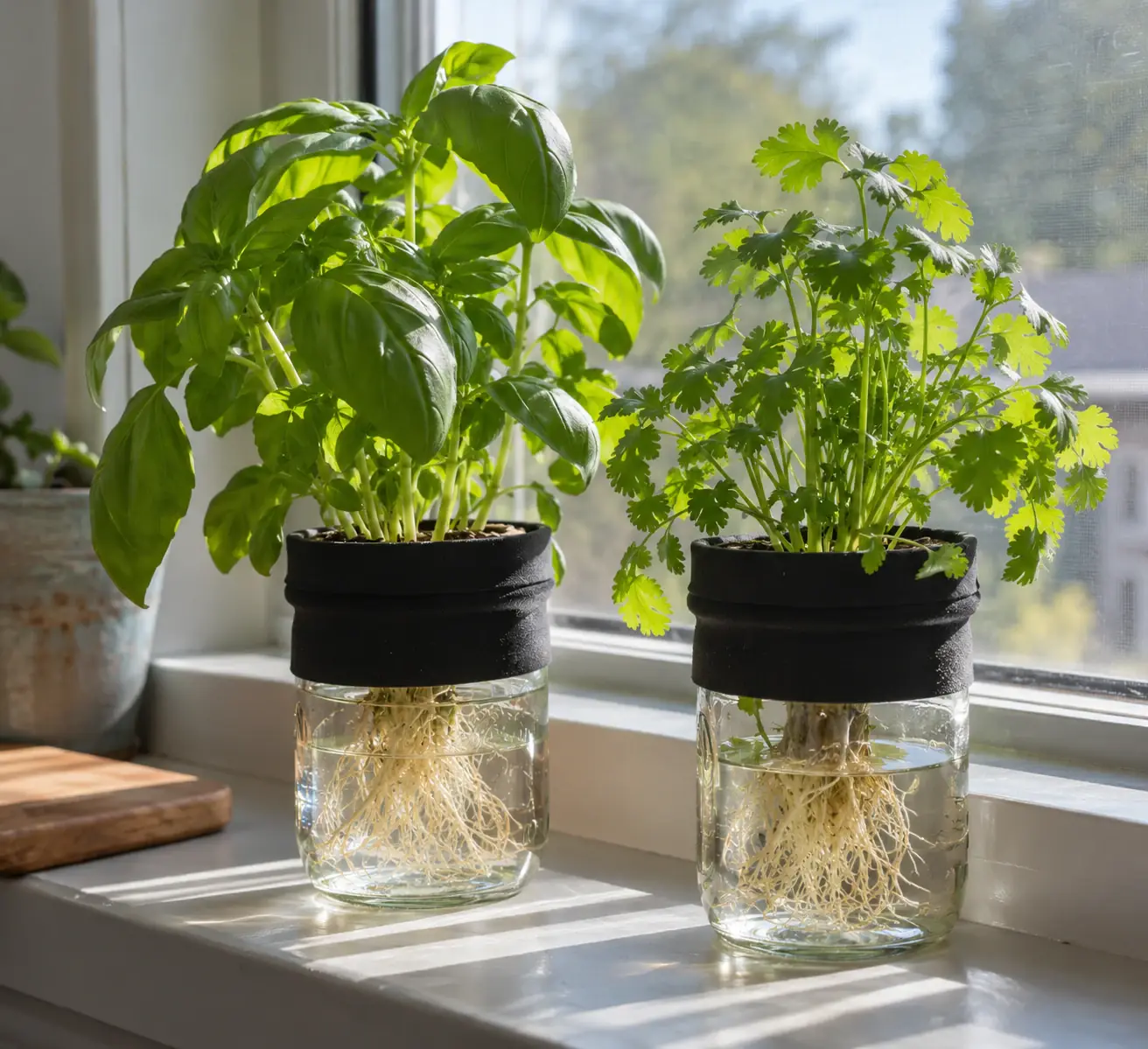
A pint or quart jar wrapped to block light is plenty for one clump.
Mix the nutrients
Use a hydroponic nutrient for herbs or leafy greens at the label strength.
Set the net pot
Place the seeded cube or cleaned clump in a net pot so its base just touches the solution.
Give it light
6 to 8 hours of direct window sun, or 12 to 16 hours under a grow light.
Let the level fall
Don't refill to the top. The air gap gives the roots oxygen; top up part way only if it runs low.
Harvesting
Cutting Chives So They Keep Coming
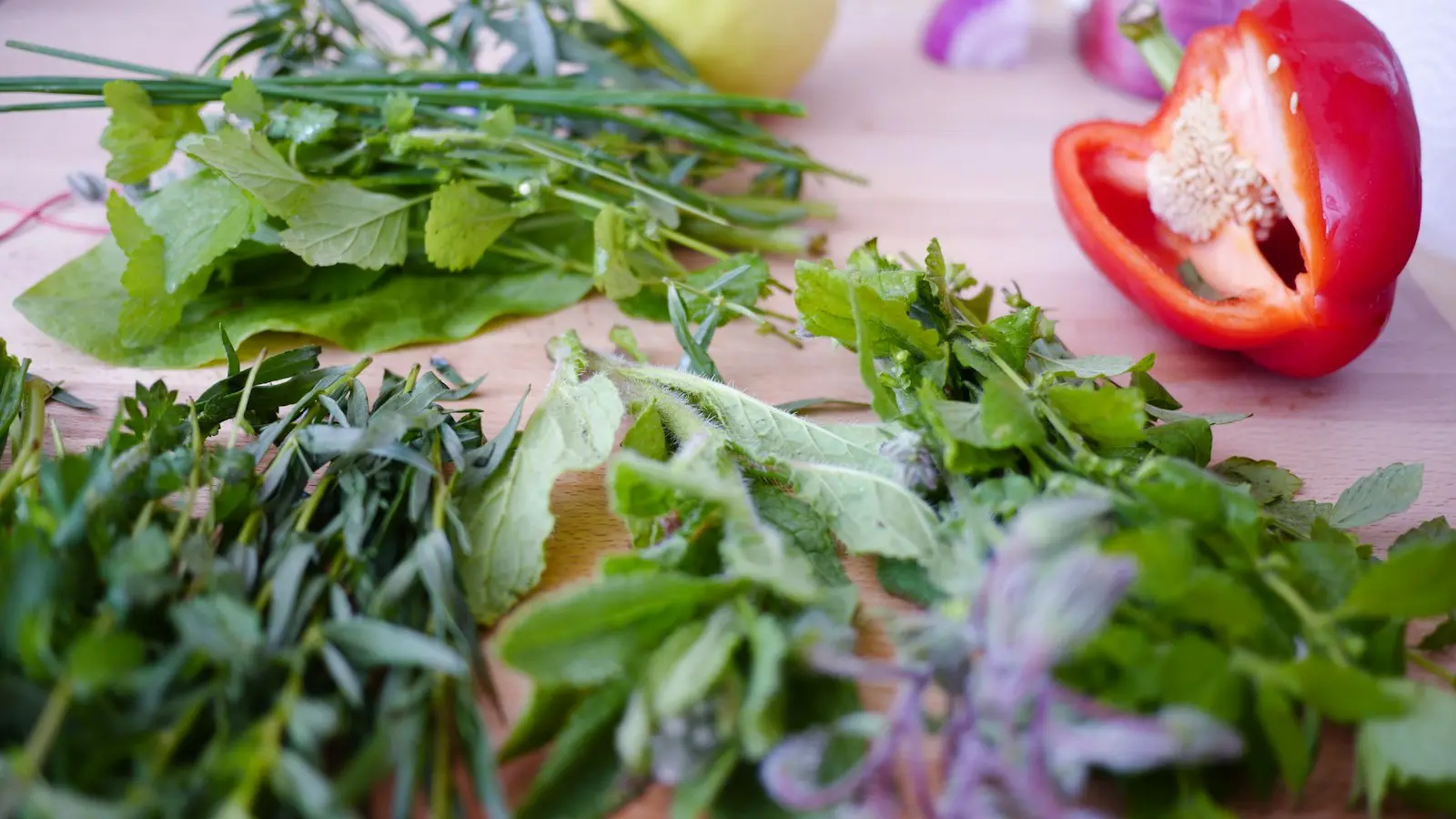
Start cutting when the leaves are about 6 inches tall. Cut the outer leaves 1 to 2 inches above the base with clean scissors, rather than snipping the tips; tip-trimmed chives look ragged and slow down. The cut leaves regrow in a couple of weeks.
Chives flower in spring with round purple heads. The flowers are edible and pretty in salads, but cutting them off keeps the plant putting its energy into leaves. Our post on how to cultivate your herbs covers pruning chives and green onions in more detail.
6"first cut
Conditions
Light and Temperature for Kratky Chives
Chives grow best in a bright window with several hours of direct sun, or under a grow light for 12 to 16 hours a day. In weaker light they still grow, but the leaves come up thinner and paler and regrow more slowly after cutting.
They are one of the few herbs that prefer a cooler room. Ordinary indoor temperatures suit them well, and they don't mind a cool windowsill in winter the way basil does. Very warm rooms make them slow down.
Outdoors, chives naturally die back in winter and return in spring. Indoors in a Kratky container they keep growing, but after a long run a clump can tire. When growth slows despite good light and fresh solution, divide the clump into two or three smaller ones and give each a fresh container.
- Bright window or 12 to 16 hours under a grow light.
- Cool to normal room temperature.
- Divide the clump when it slows down.
FAQ
Kratky Chives Questions
Do chives grow well with the Kratky method?
Yes. They are one of the easiest herbs for it: compact, cold-tolerant and quick to regrow after cutting.
How long does one jar of chives last?
Many months. When the clump gets crowded and growth slows, divide it and start two fresh containers.
Can I regrow chives from the grocery store?
Store-bought cut chives have no roots and won't regrow. Buy a potted plant instead and divide it.
Are chives and green onions the same?
No. Green onions are young bulb onions; chives are a separate perennial with thinner, hollow leaves. Both regrow in water.
Why are my chives turning yellow?
Usually old outer leaves that need cutting, or a solution that is nearly used up. Cut the yellow leaves out and top up part way with fresh solution.
Can I grow chives and parsley in the same container?
Yes. Both are slow, steady, long-lived herbs that like similar light and solution, so they share a container well. Give each its own net pot.
Related Kratky Herbs
Chives are slow-steady growers, like parsley. Freeze extra chives for winter cooking.